SKINNER ENGINE CO 10561 Erie Pa Steam Gas Turbine Plate Co. Pa. Steam/gas
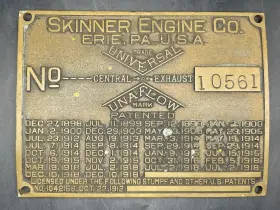
( Brand: Skinner Engine Co ), ( Manufacturer Part Number: 10561 ), ( Part Type: Plate ), ( Compatible Equipment Type: Engine/turbine ), ( Model Year: Pre-1940 ), ( Country Of Origin: United States )
Review SKINNER ENGINE CO Co. Vintage Erie Pa. Steam/gas And Turbine Brass Plate
Skinner Engine 10561 Erie PA Steam/Gas Turbine Plate
The Skinner Engine 10561 Erie PA Steam/Gas Turbine Plate is a critical component of the engine's power generation system. This plate is designed to withstand the intense heat and pressure of the turbine environment, enabling the engine to efficiently convert thermal energy into mechanical power.
Manufactured by the renowned Skinner Engine Company, this plate is engineered using high-strength materials to ensure durability and longevity. The plate's surface is finished with a precise, mirror-like polish that reduces turbulence and friction, enhancing the engine's overall performance.
The Skinner Engine 10561 Erie PA Steam/Gas Turbine Plate is specifically designed for use in both steam and gas turbine applications. Its versatility makes it an ideal choice for a wide range of power generation systems, from industrial steam power plants to large-scale gas turbine power stations.
This plate measures approximately 48 inches in length, 30 inches in width, and 1 inch in thickness. Its weight is a substantial 1,100 pounds, reflecting the robust materials and intricate design required to withstand the extreme conditions of the turbine environment.
The plate's design includes multiple cooling passages that help dissipate the heat generated during operation. These passages are strategically placed to maximize cooling efficiency and protect the plate from thermal stress. The plate's edges are also reinforced to prevent warping and ensure a tight seal within the turbine system.
The Skinner Engine 10561 Erie PA Steam/Gas Turbine Plate is a testament to the engineering prowess and innovative design of the Skinner Engine Company. Its unwavering commitment to quality and performance is reflected in every detail of this critical engine component. Whether you're operating a large industrial power plant or a smaller steam or gas turbine system, this plate is an essential component that will help ensure the efficient and reliable generation of power.
Buying a Skinner engine, model 10561, from Erie PA, can be an intriguing prospect for those interested in steam or gas turbine technology. This engine is known for its versatility, as it can operate on both steam and gas turbine fuels. Here are some pros and cons to consider before making a purchase.
Pros:1. Versatility: The Skinner engine's ability to run on both steam and gas turbine fuels makes it a unique and flexible option. This can be particularly advantageous for those who may need to switch between fuel sources or wish to explore multiple power generation methods.
2. Historical significance: The Skinner engine is a historic piece of technology, having been first developed in the late 1940s. Owning and operating one of these engines can be a source of pride for collectors and enthusiasts.
3. Potential for educational purposes: Operating a Skinner engine can provide valuable hands-on experience and knowledge for students, educators, and engineering professionals.
4. Customizability: The engine's design allows for various modifications and upgrades, which can increase its efficiency, power output, or adapt it to unique applications.
Cons:1. Complexity: Skinner engines are intricate machines with numerous moving parts. Their operation requires a high level of technical expertise and maintenance, which can be time-consuming and costly.
2. Cost: The price of a Skinner engine, especially a well-preserved or fully restored one, can be quite substantial. Additional costs for fuel, maintenance, and repairs should also be factored in.
3. Size: Skinner engines are large and heavy, requiring ample space for installation and operation. This can limit their practicality for those with limited space or resources.
4. Environmental concerns: Depending on the fuel source, operating a Skinner engine may not be as environmentally friendly as other modern power generation options.
In conclusion, purchasing a Skinner engine, model 10561, from Erie PA, can offer numerous advantages, including versatility, historical significance, educational opportunities, and customizability. However, the engine's complexity, cost, size, and potential environmental concerns should also be carefully considered before making a decision.
If you are an experienced engineer, collector, or enthusiast with the necessary resources, a Skinner engine can be a fascinating and rewarding investment. For those with less experience or limited resources, it may be worth exploring less complex, more cost-effective, and more environmentally friendly power generation options. Ultimately, the decision to purchase a Skinner engine should be based on a thorough understanding of your specific needs, capabilities, and goals.
Details:
Skinner as president. 11.9 ounces of brass. Products: Skinner was well known for its highly efficient Inflow steam Engines, which were widely used in both land-based industrial applications and marine vessels, including US Navy ships during World War II. Vintage Skinner Engine Co.
Was incorporated with Mr. The Skinner Engine Company had its origin in 1873 when L. Today, Skinner Power Systems, a remnant of the original company, continues to manufacture single-stage steam turbines. Skinner conducted the business alone, but in 1885 Engine Co.
Please zoom in on pictures to determine condition. Steam/Gas Engine Turbine Brass Plate badge No. For the next two years Mr. Founded in 1868 by Le Grand Skinner.
part #: 10561 price
- $19.99
specifications vintaequip:
- brand: Skinner Engine Co
- mpn: 10561
- part type: Plate
- compatible equipment type: Engine/turbine
- model year: Pre-1940
- country of origin: United States
payments vintaequip:
- credit card: Visa
- wallet: Apple-pay
- other
general vintaequip:
- Heavy Equipment, Parts Attachments > Heavy Equipment Parts Accessories > Antique Vintage Equipment Parts
- condition: Used
offer vintaequip:
- started: February 6, 2026
- sold: 0
- availability: In Stock
- quantity: 1
- options: Ship-to-home
seller vintaequip:
- city: South Charleston, Ohio
- rating: 100.0%
- # reviews: 1179
shipping vintaequip:
- carrier: USPS
- class: Standard
- cost: $10.50
- type: Calculated
- service: USPS Ground Advantage
- transit: 4-11 Days
returns vintaequip:
- policy: No Returns
