FORD EAF-6510-C Tractor Nos Bushing Valve Total
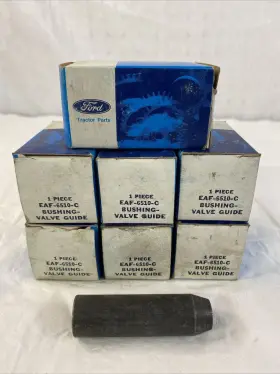
( Brand: Ford ), ( Manufacturer Part Number: EAF-6510-C ), ( Model: FORD EAF-6510-C ), ( Part Type: Valve Bushing Guide ), ( Model Year: 1967 ), ( Compatible Equipment Type: Tractor )
Review FORD Tractor Parts Nos Bushing Valve Guide Lot Total Of Pieces
The Ford EAF-6510-C tractor hydraulic nose bushings and valve are essential components of the hydraulic system in Ford tractors manufactured in 1967. These bushings and valve provide a sealing and cushioning function between the tractor's hydraulic cylinder and the drawing bar, ensuring proper functionality and stability of the implement being pulled by the tractor.
The nose bushing is a round, cylindrical component made commonly of rubber or polyurethane material, designed to absorb and distribute the forces exerted between the tractor and the implement. these bushings have an outer diameter that fits snugly into the hydraulic cylinder, while their inner diameter accommodates the drawing bar. They also have a central hole to allow for the passage of hydraulic fluid.
The Ford EAF-6510-C tractor's hydraulic valve, specifically the nose valve, plays a vital role in controlling the direction and flow of hydraulic fluid to the various parts of the tractor's hydraulic system. This valve is typically located at the front of the tractor, near the nose of the hydraulic cylinder. It consists of various orifices, check valves, and control valves that allow for smooth operation of the tractor's hydraulic functions, such as lifting the drawbar or implementing quick-coupler functions.
When these components, specifically the bushings and valve, wear out or develop leaks, it could lead to issues such as decreased tractor performance, decreased efficiency, uneven implements handling, and loss of hydraulic fluid. Inspecting and replacing these components on a regular basis is recommended for optimal tractor performance and longevity. The Ford EAF-6510-C nose bushing valve is a critical replacement part for restoring the hydraulic functionality of the 1967 Ford tractor.
The Ford EAF-6510-C tractor, a model from the 1960s, is an older piece of agricultural equipment that may require the replacement of its bushing valve. Before making a decision to buy a new one, it's essential to consider the pros and cons to help determine if the investment is worthwhile.
Pros:1. Improved Tractor Performance: Replacing the bushing valve can enhance the overall performance of the tractor. A worn-out valve can cause leaks, leading to a decrease in hydraulic efficiency and power loss. A new valve can help restore the tractor's original performance.
2. Better Fuel Efficiency: A well-functioning hydraulic system can help improve fuel efficiency. Since the tractor may consume more fuel when the hydraulic system isn't working optimally, a new bushing valve can help reduce fuel consumption and save costs in the long run.
3. Extended Lifespan: A new bushing valve can contribute to extending the overall lifespan of the tractor. By maintaining the tractor in good condition, it can help ensure that other parts don't get damaged due to mechanical problems caused by a faulty bushing valve.
Cons:1. Cost: Replacing a bushing valve can be relatively expensive, especially for an older model tractor like the Ford EAF-6510-C. The cost of a new valve, labor charges, and possibly other related components can add up.
2. Availability: Finding a new bushing valve for a 1967 Ford EAF-6510-C tractor may pose a challenge. These parts are not easily available in most auto part stores, and replacement may require special ordering.
3. Time and Labor: Installing a new bushing valve can be a time-consuming process, especially if the tractor isn't in good working condition. The labor costs, coupled with the time spent waiting for the part, can add to the overall expense.
Conclusion:Replacing the bushing valve on a 1967 Ford EAF-6510-C tractor can lead to improved tractor performance, better fuel efficiency, and an extended lifespan. However, the high cost, potential availability issues, and time and labor required should be carefully considered before making a decision. Only if the benefits outweigh the investment should one consider purchasing a new bushing valve for this tractor.
Recommendation:If the tractor is frequently used for heavy-duty tasks, or if the current hydraulic performance is causing significant issues with efficiency or power, then replacing the bushing valve is likely a worthwhile investment. Alternatively, fitting the tractor with a rebuilt or used bushing valve may represent a more affordable option while still providing satisfactory performance.
For those who infrequently use the tractor and primarily utilize it for lighter duties, it may be more cost-effective to explore alternative adaptations, such as changes to the workload, substituting labor-intensive tasks, or considering the purchase of a smaller, more affordable tractor for simpler jobs. Regular maintenance, such as checking and changing hydraulic fluids, may also help maintain the tractor's performance while delaying the need for a new bushing valve.
Details:
The boxes aren all pretty. One of the pieces doesn have a box. The boxes are marked 1967.
part #: eaf6510 prices
- $13.06-$49.95
specifications vintaequip:
- brand: Ford
- mpn: Eaf-6510-c
- model: Ford Eaf-6510-c
- part type: Valve Bushing Guide
- model year: 1967
- compatible equipment type: Tractor
shipping vintaequip:
- cost: $12.95
- class: Standard
- carrier: USPS
- service: USPS Ground Advantage
- transit: 4-10 Days
- type: Calculated
seller vintaequip:
- city: Mayport, Pennsylvania
- # reviews: 935
- rating: 100.0%
payments vintaequip:
- credit card: Mastercard
- other
- wallet: Paypal
returns vintaequip:
- policy: No Returns
general vintaequip:
- condition: New Open box
- Heavy Equipment, Parts Attachments > Heavy Equipment Parts Accessories > Antique Vintage Equipment Parts
offer vintaequip:
- availability: In Stock
- quantity: 1
- best offers: True
- sold: 0
- started: January 12, 2025
- options: Ship-to-home
Ford EAF-6510 Is Similar To:
- Ford 600-800 Tractor Radius Arm Mount Blocks With Caps 4 (42.6% similar) Used radius arm mount blocks with caps 4 for the Ford tractor 600-800...(May 15th, 2024)
- Ford 8n-jubilee Tractor Fender Stamped Right (37.1% similar) Has some small rust. Ford tractor 8n jubilee fender stamped Ford came off of the right side...(May 19th, 2024)
- Ford 601-641-661 Tractor Front Steering Spindles L-r (47% similar) Used front steering spindles, left and right for the Ford 601-641-661 tractor...(May 19th, 2024)
- Ford 801-841-861 Tractor Front Steering Spindles L-r (43.9% similar) Ford tractor 801-841-861, front steering spindles left and right...(May 20th, 2024)
- Ford 8n-9n Tractor 8n-9n-jubilee Misc Stud Bolts Engine-transmission-differential (27.2% similar) Stud bolts engine, transmission, differential, for the Ford tractor 8N-9N-JUBILEE. Will fill a small flat rate box, about 10 pound used misc...(May 20th, 2024)
- Complete Tractor 1109-9404 Oil Pan Replacement Part For Ford New Holland Models (27.7% similar) Part #: complete tractor 1109-9404 for sale...(May 22nd, 2024)
- Ford 4100 Instrument Panel For 6610 4000 6600 4110 2000 3600 7610 4600 Tractor (19% similar) Part #: Ford 4100 for sale...(May 22nd, 2024)
- Ford C5nn9510n Remanufactured Tractor Holley Oem Carburetor 2000 3000 4000 3 Cyl (31.3% similar) Nice rebuilt oem core Holley carburetor and mounting gasket. This listing fits: Ford 20 21 2110, 23 26 30 4000 3 cylinder series tractors OE number on carb: C5NN9510N, 3657-A, replaces Holley carburetor no. Stripping complete carb and the disassemble of for internal inspection...(May 23rd, 2024)
- Ford T030 2n 9n 8n Tractor Center Hub To Rim Carriage Head Bolts 6 One Side (34.8% similar) Part #: Ford T030 for sale...(May 24th, 2024)
- Ford 8n-9n-2n Tractor Hydraulic 3pt Top Link Mount Bracket (36.2% similar) Top link for Ford tractor in good condition with pins...(May 27th, 2024)
- Ford 8n-2456 Tractor Left Side Brake Pedal (42.6% similar) Drop forged the only thing that wears out is the knobby footrest surface, nice original left-hand brake pedal arm...(May 28th, 2024)
